"Forgetting" is a common frustration with AI chat apps, and one of the issues users care about most. Here's how the amiverse team approaches the challenge. After all, even a beautifully animated Live2D character can't make an immersive experience last if there's no long-term connection behind it.
How do amiverse characters remember events?
Characters in amiverse use large language models (LLMs) to role-play and respond in ways that fit their personality and background. Each time you send a message, the model uses the surrounding conversation—or context—to generate a likely response. For example, if you complained about your boss yesterday and bring them up again today, the character might ask, "Was your boss giving you a hard time again today?" So if we could just fit everything into the context, the character would remember it all forever, right? The ideal is always more appealing than reality...
Every language model has a limit on how much text it can take in (context window). Even if a modern model can handle a million tokens, it may not reliably recall everything. We also have to consider the high computational cost, such as $5 per million tokens or $2.50 per million tokens. Feeding the entire conversation history to an amiverse character wouldn't solve forgetting perfectly. It could also lead to missed details, slower replies, and eye-watering costs—not a great trade-off 🥹
One way to address these issues is to use different context-engineering techniques to organize character memories into modules. These can include retrieving relevant context (for example, RAG), ranking the importance of keywords (for example, BM25), reranking retrieved results for relevance (for example, rerankers), and compressing memories into structured notes. These techniques help keep costs reasonable while giving characters the most relevant information for the conversation at hand.
What goes into a character's memory?
amiverse combines information retrieval, memory compression, and structured notes to help characters remember events. Figure 1 illustrates how information in amiverse becomes part of a character's memory:
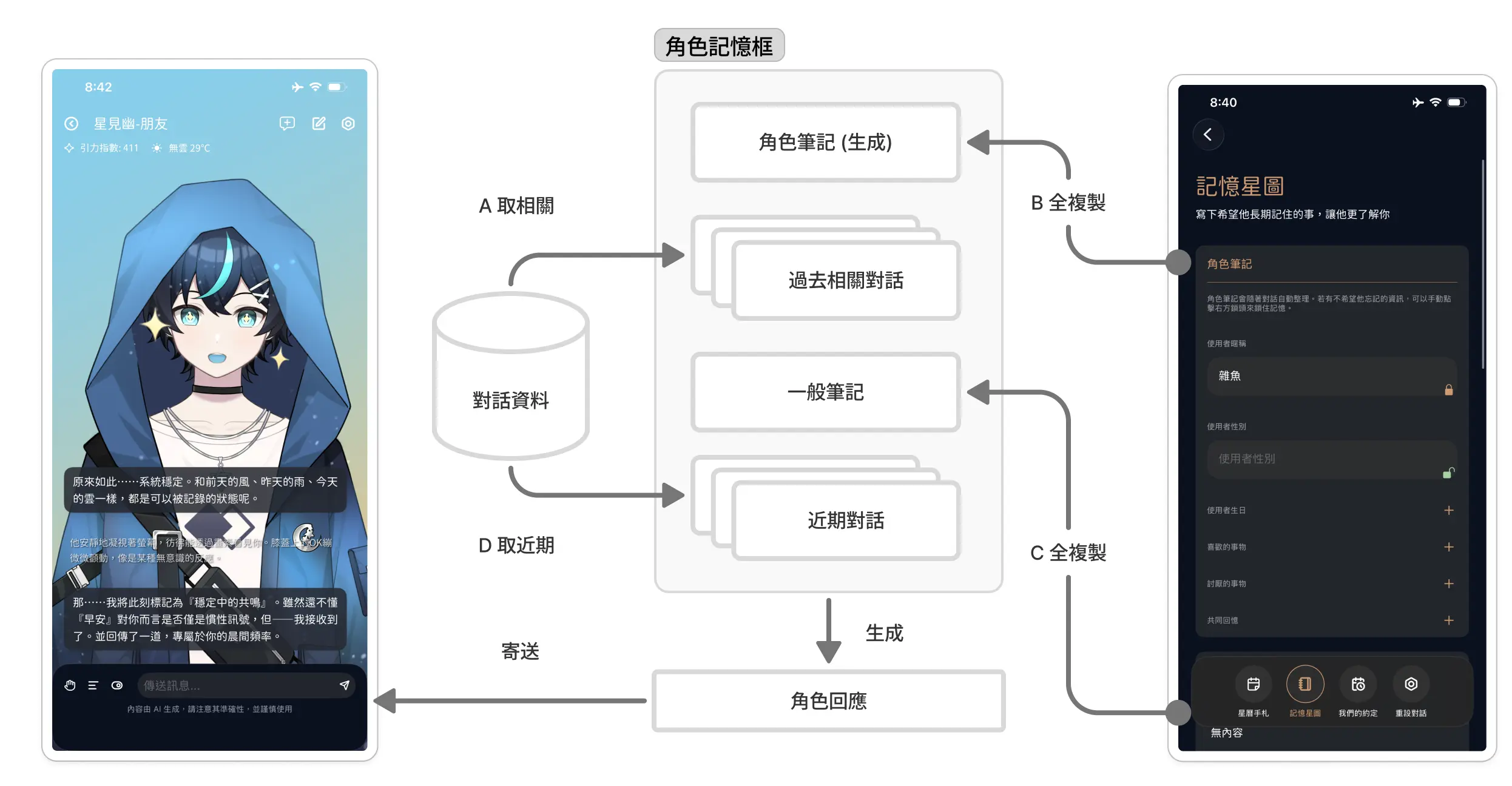
Figure 1: A conceptual diagram of the amiverse.app memory system
First, each conversation is stored in a conversation database. When you send a message, amiverse searches that database for relevant conversation history (A). A context-processing module then turns relevant information into character notes in the Memory Constellation (B). Those notes are included in the character's context to help preserve important details over time. Finally, recent messages (D) are added near the end of the context to keep the conversation flowing. These sources make up what we call "dynamic memory," which changes as the conversation develops.
In addition to dynamic memory, characters have long-term "fixed memories": core character settings such as their story, background, and behavior; your preferences; time and place information that changes with the setting; and general notes you can write freely (C). Understanding these different memory sources helps us design better responses and improve consistency when a character forgets something.
How can I help a character remember what matters?
Even with all these steps, a character may still forget something important. What can you do?
Not every conversation has the same value as a memory. Although amiverse uses common context-engineering techniques, the character may not always identify and rank memories the way you expect. While our team continues to improve the memory system, here are a few ways you can help a character remember important things:
- Edit character notes manually: In the Memory Constellation, you can edit character notes—for example, to correct a preference or add an event. If the character's replies seem off, check what the notes currently say and add, remove, or revise details as needed.
- Lock important memories: Character notes are part of dynamic memory and may change as the character learns from your conversations. During an update, some earlier details might be removed. Use a memory lock to protect an important note so it remains available in future conversations.
- (Advanced) Write a general note: General notes in the Memory Constellation are a place to record anything you want. Their contents are copied into the character's context. If there's something specific you want the character to remember—or you have experience writing prompts—you can use these notes to expand its memory or influence its overall response style.
We're also considering giving users more control over the memory settings in the Memory Constellation, so everyone can tune the system to their preferences and get more consistent results.
We hope amiverse can be more than a question-and-answer tool: a virtual presence that grows with you over time and remembers the moments you share. If you're interested in an AI chat app with a VTuber-style character that can remember, download amiverse from the App Store. If a character suddenly develops a goldfish's memory—or if you have any other feedback—reach us on Instagram or Threads.
Thank you!